







MeRT


Brain Treatment Center sign on the wall

Chronic Insomnia

Restorative sleep, restored life

We help the brain find a healthier sleep rhythm.

플로리다 맥딜 공군기지 로고
블리처 리포트 로고
디펜스원 로고
더 닥터스 로고
nbc 스포츠 로고
글로벌 sof 로고
워싱턴 포스트 로고
월스트리트 저널 로고

Insomnia (Chronic Insomnia)

Insomnia is more than just an inability to fall asleep
it can have serious effects on both mental and physical health.
Long-term sleep disorders impair mood regulation and concentration,
cause abnormal stress responses, and reduce overall quality of life.

※ The content on this page is for educational/informational purposes. Individual diagnosis and treatment require professional consultation.
Key Symptoms

Insomnia goes beyond the discomfort of not sleeping — it also affects daily life and health.

Fatigue and lethargy

  • -Severe daytime fatigue and overwhelming drowsiness.

Reduced concentration

  • -Reduced work and learning efficiency, declining memory, and frequent mistakes.

Mood changes

  • -Heightened sensitivity, irritability, and feelings of depression or anxiety may appear.
  • -Headaches, indigestion, and muscle tension may accompany insomnia.

Physical symptoms

  • -Headaches, indigestion, and muscle tension may accompany insomnia.

Comorbid Conditions

Sleep disorders are closely associated with a wide range of medical and neurological conditions.

  • -Anxiety disorders
  • -Depression
  • -PTSD (Post-Traumatic Stress Disorder)
  • -Dementia, Parkinson's disease
  • -ADHD
  • -Autism Spectrum Disorder (ASD)
  • -Type 2 diabetes
  • -Hypertension
  • -Cardiovascular disease

Sleep & Brain Function

Research illustration of the sleep cycle

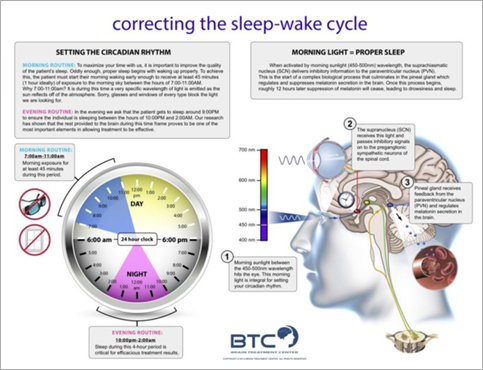
Throughout the night, the brain repeats regular sleep cycles of about 90–110 minutes, restoring itself.

  • -Deep slow-wave sleep: physical recovery and hormone regulation
  • -REM sleep: memory processing and emotional regulation

When sleep is frequently disrupted, these recovery cycles break down, causing daytime fatigue and changes in cognitive function.

MeRT for Insomnia

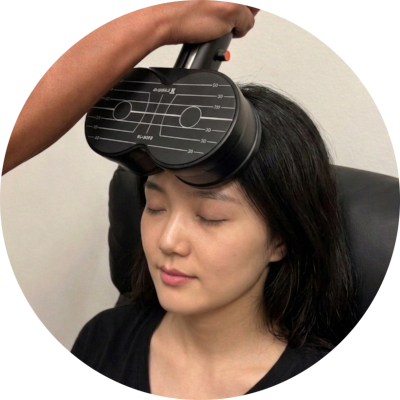
By analyzing qEEG and EKG results, we identify each patient's unique brain activity patterns and conduct MeRT℠ (Magnetic Resonance Therapy) to help rebalance brain function. The treatment is delivered safely in a non-invasive, drug-free manner.

Treatment outcomes vary by individual condition. The equipment used for MeRT is FDA-cleared and generates magnetic waves that deliver optimized stimulation to targeted regions of the brain.

How we help

“Every night I couldn't fall asleep easily, and even when I forced myself to sleep, I didn't feel refreshed — my days felt like walking through fog. But after seeing my own brainwaves and starting treatment tuned to my own rhythm, I rediscovered the 'clear morning' I had forgotten for years.”

BTC Patient

MeRT Approach

Sleep is the brain's cleanup time. MeRT can be a personalized pathway to better sleep.

MeRT is not an artificial sleep aid. It helps recalibrate brain function so the brain itself can enter deep sleep cycles at night. Sleep is not simply the act of falling asleep — it is the process of creating the optimal state for the brain to rest and recover on its own.

About MeRT℠
Illustration depicting brain stability

Insomnia & Brain Stability

Through precise testing, we accurately read the signals your brain is sending and deliver personalized treatment.

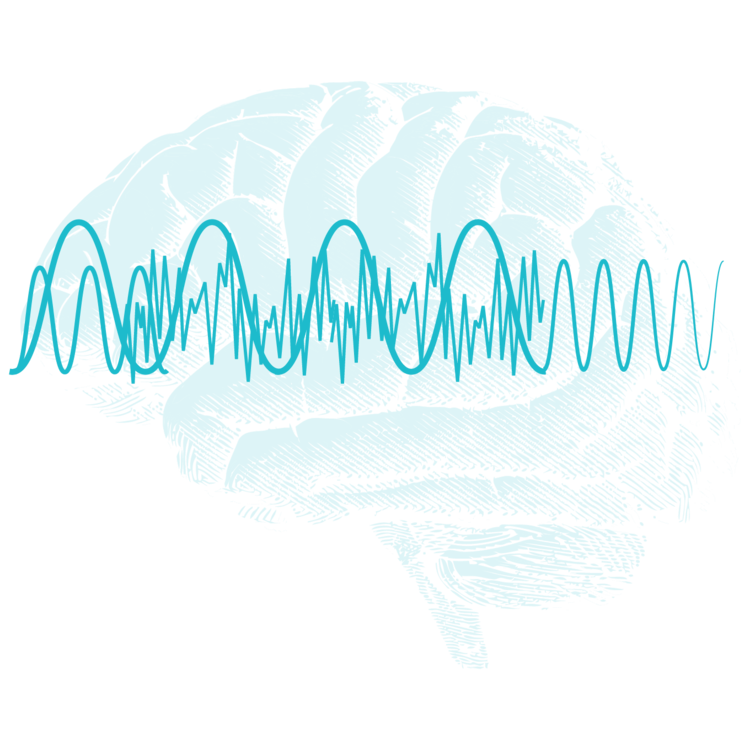
Sleep disorders occur when specific regions of the brain become overactive occurs when the neural network regulating the
sleep cycle fails to communicate smoothly. Using precise tools such as EEG and qEEG, we collect signal imbalances in the brain,
identify the brainwave patterns that interfere with falling and staying asleep, and integrate them into the treatment plan.
This process is personalized to each patient's sleep architecture and brain state.

A woman peacefully asleep in bed

Restorative Sleep, Restored Life

For those who cannot achieve deep sleep, 'quality sleep' has the power to change everything in life

The goal of insomnia treatment is not simply to reduce time awake,
but to improve the quality of deep sleep so the brain can cleanse and restore itself.

Medical staff reviewing brain data

Adaptive Precision Care

The cycle of evaluate → treat → feedback → adjust is the core

Sleep is variable, shaped by environment and psychological state.
BTC Korea does not use a fixed protocol —
we provide flexible care that adapts to each patient's real-time changes.

Frequently Asked Questions

Is MeRT treatment safe?

MeRT uses FDA-cleared, non-invasive magnetic stimulation. No anesthesia or drug injection is involved. It is applied after medical evaluation; no significant adverse events have been reported.

Can MeRT be received while taking sleep medication (zolpidem, etc.)?

Yes. MeRT is designed as a complement to medication; existing sleep medication can be continued.

What insomnia symptoms have shown change?

Meaningful changes have been observed across overall sleep quality — time to fall asleep, sleep maintenance, and the proportion of deep sleep.

Does MeRT apply to both transient and chronic insomnia?

Determined by medical evaluation. Because causes vary, suitability is judged based on qEEG results.

When do effects appear?

Varies by individual, but changes are typically observed over a 4–6 week course.

How long is the treatment period?

Generally 4–6 weeks; determined by the medical team based on qEEG and individual condition.